 Cardiovascular Physiology Concepts, 3rd edition textbook, Published by Wolters Kluwer (2021)
 Normal and Abnormal Blood Pressure, published by Richard E. Klabunde (2013)
The Pharmacologic Treatment of Angina
- THIS PAGE: Causes of Angina
- Page 2: Types of Angina
- Page 3: Antianginal Drugs
Causes of Angina
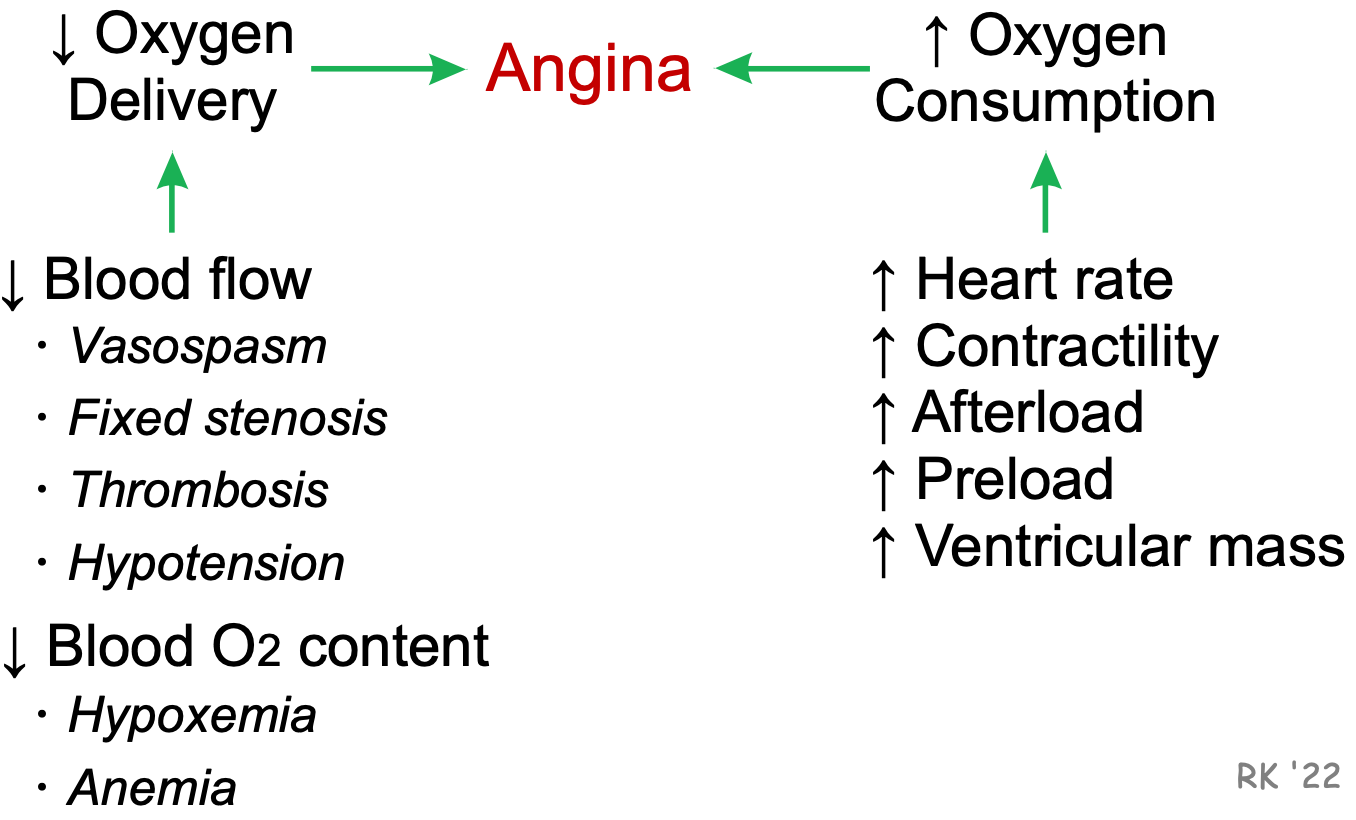 Angina, which is sometimes called angina pectoris, is chest pain or discomfort that is caused by inadequate coronary blood flow (i.e., ischemia) to meet the oxygen requirements of the myocardium. When coronary blood flow cannot deliver sufficient oxygen to support cardiac oxidative metabolism (reduced oxygen supply/demand ratio), the myocardium becomes hypoxic. This triggers pain receptors within the heart, which leads to the classical presentation of chest pain and the sensation of substernal heaviness or pressure.
As described below and in the above figure, decreased oxygen delivery can be caused by either reduced coronary blood flow or reduced coronary blood oxygen content. Coronary blood flow can be decreased by 1) transient constriction of the coronary arteries (i.e., vasospasm), 2) chronic narrowing of a coronary artery (i.e., fixed stenosis) caused by atherosclerosis, 3) the formation of a blood clot within the vessel lumen (i.e., coronary thrombosis), or 4) systemic hypotension that reduces coronary perfusion pressure. Reduced oxygen content of the arterial blood caused by hypoxemia (e.g., reduced blood partial pressure of oxygen) or anemia (e.g., reduced number of red cells or hemoglobin) decreases oxygen delivery to the myocardium even if coronary flow is normal. Angina can also be precipitated by increased oxygen consumption, especially if the coronary blood flow is already compromised. Increases in heart rate, contractility (inotropy), afterload (e.g., elevated arterial pressure, aortic valve stenosis, ventricular dilation), and preload, the latter of which stimulates the Frank-Starling mechanism to increase the force of cardiac contraction. When the cardiac mass is increased by ventricular hypertrophy, there is an increase in oxygen consumption by the heart. In summary, decreased coronary flow or increased oxygen consumption, or a combination of the two, decreases the oxygen supply/demand ratio and leads to myocardial hypoxia and the stimulation of pain receptors within the myocardium.
Go to Next Page
Types of Angina
Revised 11/30/2023
 Twitter
 Telegram
 LinkedIn
 WhatsApp
 Facebook
 Reddit